Hidden object games ask you to do something simple: look carefully. You get a detailed scene and a list of things to find, and the only tools you need are your eyes and your patience. Even so, they can be remarkably absorbing, and the moment when an object you have looked past ten times suddenly jumps out at you is hard to beat. Here is what is worth playing, and some search techniques that make you far quicker than you may expect.
Our picks — play them free
 #1Find Hidden ObjectsSearch and discover hidden objects in detailed scenes.
 #2Hidden Object DetectiveLook carefully at each scene, find the hidden objects listed on screen, and tap an object once you discover it.
 #3Find the DifferencesCompare two pictures to uncover more than 5 differences.
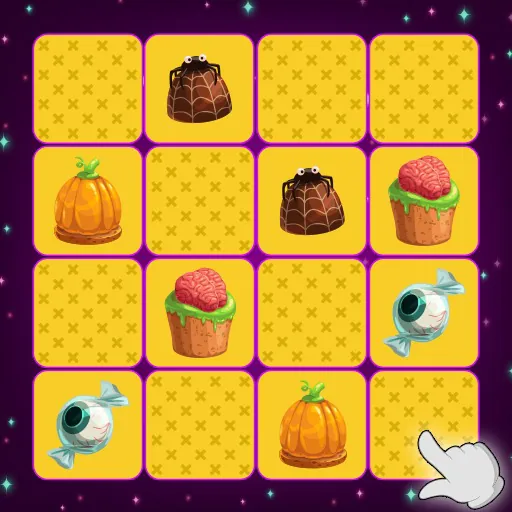 #4Memory Match Pair GameFind matching pairs of cards.
Types of seek-and-find game
The genre has several branches, all of which share a focus on careful observation. Classic hidden object games give you a list and a busy scene. Spot the difference games show two near-identical pictures and ask what has changed. Detective-themed games wrap the search in a mystery, giving you a bit more reason to keep looking. All of them test the same skill, but the mood of each is quite different.
Hidden object games to try
Find Hidden Objects is the natural starting place. It has detailed scenes to explore, hints when you need them, and no time limit, so you can enjoy the art at your own pace. Hidden Object Detective gives you a list of objects for each scene and unlocks new levels as you complete them, and its detective theme adds some sense of purpose to the search. Both are very approachable, and both work well on a tablet, where a larger screen makes the fine details easier to see.
Spot the difference
Find the Differences shows you two pictures and asks you to find what does not match, tapping each difference to mark it. Unlike a list-based search, you do not know what you are looking for, which makes it a test of comparison rather than recognition. It also comes with a time allowance, which gives it more urgency than a typical hidden object game. If you enjoy this, you may also like Memory Match Pair Game, which tests your visual memory rather than comparison.
Search techniques that really work
Most people scan a scene in a random way, and their eyes keep returning to the same interesting spots. A little method makes a big difference.
- Search in a grid. Mentally divide the scene into quarters and finish each one before moving on, which stops you repeatedly checking the same areas.
- Search for the shape, not the item. A hidden object is often disguised by colour, but its outline stays the same, so look for the silhouette.
- Look for things that do not belong. Objects are often placed where they make no sense, such as a key on a tree branch.
- Check the edges and corners. They get less attention, which makes them popular hiding places.
- Move on when stuck. Coming back with fresh eyes often makes an item obvious within seconds.
- Save hints for the end. Use them when you have truly run out of ideas, because finding something yourself is the fun part.
How to spot differences faster
Comparing two pictures uses a different technique. Rather than studying each picture fully, look at a small area in one, then the same area in the other, switching quickly. Your eyes are good at noticing small changes when they jump straight between two matching spots. Check the outline of the picture first, then the larger objects, and leave the fine details for later. Common changes include a missing item, a colour swap, an object that has moved a little, or something that has been added.
Make the screen work for you
If your device lets you, play these games on the largest screen available, and turn up the brightness. Details that are almost invisible on a small dim phone screen can be easy to see on a tablet or a computer.
Are these games good for you?
They certainly keep your attention focused, and many people find them very calming, since a single quiet task can push away other thoughts for a while. They also encourage you to look closely and patiently, a habit that is easy to lose. We would not make medical claims for any game, but as a screen break that keeps your brain gently busy, they are hard to fault. They are also easy to share, as children and grandparents can happily search the same scene together.
Our free adventure games guide covers games with more story and exploration, and our free brain games guide includes other games built on attention and memory. For a similarly quiet pace, take a look at our list of relaxing games, or browse the full puzzle games category when you are ready for a change.
Choosing the right game for you
If you want complete calm, choose a game with no timer, such as Find Hidden Objects, and treat each scene as a picture to wander around in. If you like a bit of tension, spot the difference games and timed levels add just enough pressure to sharpen your attention. Playing with someone else can be great fun as well. Try racing a friend to the next object, or work together with a child, who may well spot things that you miss.
Hints are there to help, so use one if a stubborn item is spoiling the fun, and treat a scene that took a while as a small victory. Replaying one a few days later is often surprisingly enjoyable.
Frequently asked questions
What is a hidden object game?
A game where you search a detailed scene for a list of items. The challenge lies entirely in looking carefully, with no reflexes required.
Are there hidden object games with no time limit?
Yes. Find Hidden Objects has no time limit, so you can explore each scene at your own pace.
How can I get better at finding hidden objects?
Divide the scene into sections, look for each item's outline rather than its colour, and check the edges, where objects are often hidden.
Are hidden object games suitable for kids?
Generally yes. They involve no violence or fast reactions, and families can easily search a scene together.