Adventure games are the genre that rewards curiosity. There is no score chasing you and usually no timer — the pleasure is in exploring somewhere, working out how it fits together, and watching a story open up because you paid attention. That patience translates unusually well to the browser, where a game can be picked up in a spare twenty minutes without a download. This guide covers the main types of adventure game, what makes each work, and how to get past a wall without ruining the puzzle for yourself.
Our picks — play them free
 #1Hero Rescue PuzzlePull the pin to solve each puzzle.
 #2Find Hidden ObjectsSearch and discover hidden objects in detailed scenes.
 #3Hidden Object DetectiveLook carefully at each scene, find the hidden objects listed on screen, and tap an object once you discover it.
 #4Island QuestClick or tap to move your character around the island and interact with objects.
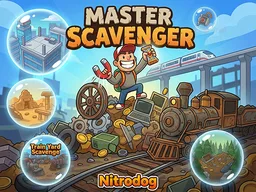 #5MasterScavengerUse the arrow keys or WASD to move, or swipe on mobile to navigate the scavenging area.
 #6Mob EscapeControl your character with the mouse to navigate through each escape level.
The main kinds of adventure game
The label covers several traditions that feel quite different in practice:
- Point-and-click — examine scenes, collect items, combine them to solve obstacles
- Escape rooms — one space, a chain of locks and codes, and a way out
- Platform adventures — movement and exploration with light puzzle-solving
- Hidden object — find items in detailed scenes, often wrapped in a story
- Narrative and choice games — the story is the mechanic; decisions branch the path
Escape rooms are the best entry point for most people. They are short, self-contained, and the satisfaction arrives every few minutes as another lock opens — where a long point-and-click adventure asks you to hold a dozen threads in your head at once.
What makes a good adventure puzzle
The genre's old reputation for absurd logic is not entirely unfair. Classic adventures produced some famously unfair puzzles, and the lesson stuck: a good puzzle must be solvable by reasoning, not by trying every item on every object.
The test is whether the solution makes sense in hindsight. When you solve a well-built puzzle you feel clever; when you solve a badly-built one you feel relieved. Good adventures also signal clearly what is interactive, so exploration is about understanding rather than hunting for a few active pixels.
The stuck-player checklist
Before reaching for a walkthrough, run through this: re-examine every item in your inventory and read the descriptions again; revisit rooms you have not been to since gaining a new item; and say out loud what you are actually trying to achieve. Most walls are a detail you read past, not a puzzle you were not smart enough for.
Why adventure games suit a browser tab
Adventures are usually turn-based in feel — nothing happens until you act — so they are unaffected by frame rate or connection speed. That makes them close to ideal for browser play, and it means a modest laptop or a phone runs them just as well as a powerful desktop.
They also survive interruption gracefully. Put a shooter down mid-match and you lose the match; put an adventure down mid-puzzle and it waits, exactly as you left it. That suits the way people actually play in a browser — in gaps, between other things.
Puzzle-solving habits worth building
Adventure games reward a few habits that most players stumble into eventually. Adopting them early makes the whole genre more enjoyable:
- Examine everything twice — descriptions often change after story events
- Note down codes and symbols as you see them, before you know what they are for
- When you gain an item, think about where you have already been, not only where you are going
- If a puzzle needs information, the information exists somewhere you have been
Where to find them
The adventure games category is the obvious starting point. Because the genre overlaps heavily with puzzle design, the puzzle games category is worth browsing too, and casual games holds most of the shorter escape-room style games.
If you want the strongest titles without browsing, start with the best online games collection, or read our best free puzzle games guide for the reasoning side of the genre.
Frequently asked questions
What is a point-and-click adventure game?
One where you explore scenes by clicking, examine and collect objects, and combine them to solve obstacles. Progress comes from observation and reasoning rather than reflexes, so they play well on any hardware.
Are escape room games good for beginners?
Yes — they are the best entry point. They take place in a single space with a clear goal and deliver a small success every few minutes, unlike longer adventures that ask you to track many threads at once.
I'm stuck. How do I get unstuck without spoiling it?
Re-read every inventory item description, revisit places you have not been since finding your newest item, and state your actual goal out loud. Most walls come from a detail you skimmed rather than a puzzle beyond you.
Do adventure games need a fast computer or connection?
No. Nothing happens until you act, so frame rate and ping are irrelevant. They run comfortably on modest laptops, Chromebooks, and phones, and they tolerate being interrupted without losing progress.