Tycoon and simulation games are the genre people mean when they say they lost an afternoon. There is no enemy, no timer, and often no way to lose — just a small operation that becomes a slightly larger operation, over and over, until it is somehow evening. The browser turned out to be an ideal home for them, because the appeal was never graphical fidelity; it was the loop. This guide covers the main kinds of free simulation game, why the loop works on us so reliably, and how to make decisions that compound instead of stalling.
Our picks — play them free
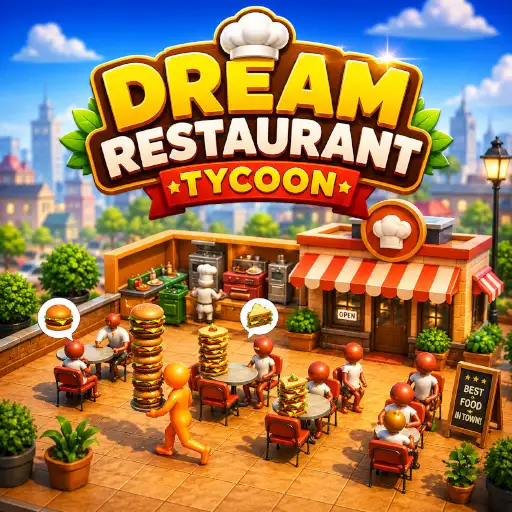 #1Dream Restaurant TycoonClick or tap on cooking stations to prepare dishes, then deliver completed orders to waiting customers.
 #2Weight Adjust GamePress the designated key, tap the screen, or click the button to increase or decrease your character's weight at the right moment.
 #3Black Hole Fill 3DClick and drag or use the arrow keys to move the black hole across the platform.
What counts as a simulation game
Simulation is a wide umbrella, and the games under it can feel entirely different. Tycoon and management games put you in charge of a business — a restaurant, a theme park, a factory — where profit funds expansion and expansion raises profit. City builders swap money for space and citizens, turning the challenge into layout and logistics. Idle and incremental games strip the genre to its essence: numbers grow, upgrades multiply them, and progress continues even when you close the tab.
Life and job simulators sit at the other end, trading optimisation for texture. Cooking, farming, shop-keeping, and craft games give you a repeatable task and a slowly improving setup, and their pleasure is closer to tidying than to strategy. Knowing which of these you are in the mood for matters, because they demand completely different amounts of attention.
- Tycoon and management — run a business, reinvest the profit
- City and base builders — layout, logistics, and growth
- Idle and incremental — numbers that grow while you are away
- Life and job sims — cooking, farming, and shop-keeping
- Strategy hybrids — building under pressure from an opponent
Why the loop is so effective
Simulation games work on a very old piece of psychology: visible, incremental progress toward a goal you set yourself. Every purchase produces a small, immediate improvement, and each improvement makes the next one arrive sooner. That compounding creates a rhythm where the next milestone is always close enough to be worth staying for, which is precisely why one more upgrade turns into an hour.
The absence of failure matters too. In most tycoon games you cannot lose — the worst outcome is slower growth. That removes the tension that makes other genres tiring and leaves only the reward, which is why simulation games are so well suited to background play, to relaxing after work, or to sessions where you want engagement without stress.
How to play them well
The one principle that improves almost every tycoon run is to prioritise upgrades that increase your rate of income over ones that give a lump sum. Anything multiplying earnings per second pays for itself and then keeps paying, and buying it early means every later purchase arrives faster. Players who buy cosmetic or one-off upgrades first spend the whole session behind where they could have been.
The second is to resist buying constantly. Spending every coin the moment you have it feels productive but usually locks you out of the more efficient purchase sitting one tier above. Saving for thirty seconds to reach the better multiplier is almost always correct. It is the same arithmetic as compound interest, and it is the difference between a run that accelerates and one that grinds.
Quick tip: check the payback time before you buy
Divide an upgrade's cost by the extra income per second it provides. That number is how many seconds until it pays for itself. Anything under a minute is usually worth buying immediately; anything over several minutes can wait until your income is higher.
Idle games and playing in the background
Idle games take the genre to its logical conclusion by continuing to generate progress while you are not playing. That sounds like it should remove the point, and instead it creates a different rhythm: you check in, spend the accumulated resources on better multipliers, and leave again. The gameplay is entirely in the spending decisions, and the waiting is what makes those decisions matter.
Browser idle games suit this pattern especially well because a tab costs nothing to leave open. Many also apply offline progress when you return, so closing the browser is not a penalty. If you like optimisation but do not want a game demanding continuous attention, this is the corner of the genre to explore first.
What browser technology made possible
Simulation games were among the first genres to feel genuinely complete in a browser, because their demands are computational rather than graphical. Managing hundreds of entities and running an economy is well within what modern JavaScript engines handle, and WebGL added proper 3D city and park builders on top of that. A browser tycoon game today is not a cut-down version of anything.
To dive in, our simulation games category covers tycoon, management, and life sims, while strategy games holds the builders and games where an opponent pushes back. If you want the lighter, number-growing end of the genre, casual games is where the idle and incremental titles live. All of them run instantly in your browser, and the top online games collection is a reliable shortcut to the ones players return to most.
Frequently asked questions
Are tycoon and simulation games free to play online?
Yes. Every simulation, tycoon, and idle game on OnlineGameWorlds is free to play directly in your browser with no download, no install, and no account required.
What should I upgrade first in a tycoon game?
Anything that increases income per second rather than giving a one-off bonus. Divide the cost by the extra income it produces to get the payback time — under a minute is usually an instant buy.
Do idle games keep progressing when I close the tab?
Many browser idle games apply offline progress when you return, so closing the tab is not a penalty. Others continue only while the tab stays open, which costs nothing to leave running.
Can browser simulation games handle big cities and economies?
Yes. These games are limited by computation rather than graphics, which modern browsers handle well, and WebGL supports full 3D city and park builders running at good frame rates.