Word search is one of the gentlest puzzles there is. You get a square of letters and a list of words, and somewhere in that square each word is hiding. There are no clues to decode and no spelling to produce from memory, which is why it suits almost anyone. Yet some people clear a grid in a couple of minutes while others hunt for ages for the last word. The difference is technique, not luck, and this guide explains the rules, the methods that speed you up and the games to practise them on.
Our picks to play for free
 #1Word Search RelaxLook at the list of hidden words, search for them in the letter grid, and swipe letters to form words.
 #2Word Connect JourneySwipe or tap letters to form words.
 #3Word Cross ExplorerSwipe letters to connect and form words.
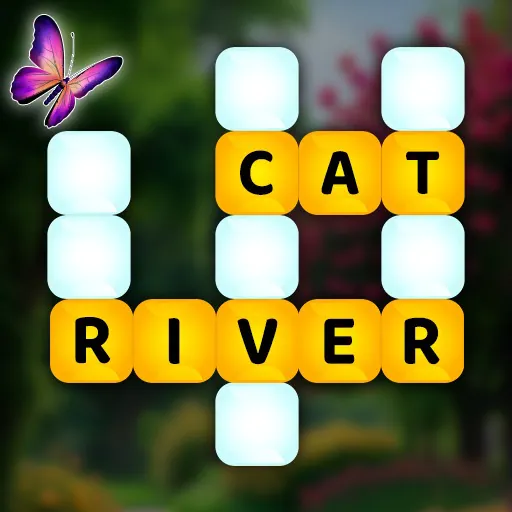 #4Word Wonders PuzzleSwipe letters to form correct words and fill all crossword blanks.
 #5Word Scramble ChallengeWord Scramble Challenge is a word puzzle game where you rearrange scrambled letters to form correct English words.
 #6Find Hidden ObjectsSearch and discover hidden objects in detailed scenes.
 #7Hidden Object DetectiveLook carefully at each scene, find the hidden objects listed on screen, and tap an object once you discover it.
The rules of word search
A word search puzzle has two parts: a grid of letters and a word list. Every word on the list appears in the grid as an unbroken straight line. Depending on the puzzle, words can run left to right, right to left, top to bottom, bottom to top, or along any of the four diagonals. Words can cross and share letters, so one letter might belong to two or three different words. When you find a word, you mark it, traditionally by circling it on paper or, in digital versions, by swiping across it.
That is all there is to it. In Word Search Relax, you look at the list of hidden words, search the grid and swipe across the letters to claim each one. It has no time limits, so it is a calm place to learn the techniques below at your own pace.
Start with the word list, not the grid
Most beginners stare at the grid hoping a word will jump out. It sometimes does, but it is slow. Read the list first and look for what makes each word easy to spot. Long words are easier than short ones because they cover more of the grid. Words containing rare letters, such as J, Q, X, Z, K or V, are easier still, because those letters appear only a few times in the whole puzzle.
Hunt the rare letter first
Pick a word with an unusual letter, scan the grid only for that letter, and check the eight directions around each one you find. With only two or three Zs or Xs in the grid, you will often find the word in seconds.
Search techniques that save time
- Scan row by row for the first letter of a word, then check all eight neighbours of each match for the second letter.
- Look for double letters. Words with LL, EE, OO or SS show up as a pair of identical letters side by side, which the eye notices easily.
- Use the last letter as well as the first. If a word ends in a rare letter, searching for that end can be quicker.
- Run your finger or cursor along each line. Guiding your eye stops you skipping rows and losing your place.
- Turn the grid in your head. Reading columns from bottom to top, or diagonals backwards, is where most missed words hide.
Why backward and diagonal words are hard
We read left to right all day, so our brains are tuned to spot words in that direction. A word running backwards or up a diagonal does not look like a word at all until you consciously trace it. If you have found every forward word and a few are left, assume the rest run in awkward directions. Pick the first letter, then test each of the eight neighbouring squares in a fixed order, such as clockwise from the top. Being systematic beats waiting for the word to appear.
Word Connect Journey is good practice for this, because its hidden words can run horizontally, vertically or diagonally, and it suggests starting with shorter words to reveal letter patterns. Once you are used to it, those diagonal words start to stand out much sooner.
Finding the last few words
The final word in a grid is often the hardest, partly because it is short and partly because you have looked at the same squares many times already. Try these tricks. Look at the areas of the grid where you have marked few or no words, because the remaining word is likely there. Search for a two-letter chunk from the middle of the word rather than its first letter. And if the puzzle lets you, take a short break, since fresh eyes notice what tired ones skip.
Remember that letters can be shared. A square already used in one word can still be part of another, so do not ignore the areas you have cleared. Many players get stuck simply because they assume used letters are off limits.
Word search versus other word puzzles
Word search is about recognition: the words are given and you only have to find them. Crosswords ask for recall, since you must produce the word from a clue, and anagram games ask you to build words from a set of letters. If you enjoy word search and want a step up, Word Cross Explorer and Word Wonders Puzzle mix letter swiping with a small crossword board, and Word Scramble Challenge asks you to rearrange mixed-up letters into the right English word. For a full introduction to clue solving, read our how to solve crosswords guide.
Who word search suits
Because it needs no special knowledge, word search works for children who are learning to read, adults who want a quiet break and anyone practising English vocabulary. Children see the shape of words again and again, and adults tend to find the steady scanning restful. It also works well in short bursts, since you can stop after a single grid. If you like that calm, searching feeling, picture-based hidden object games use the same skill with images instead of letters: Find Hidden Objects has you find objects listed on screen in detailed scenes, and Hidden Object Detective does the same across a series of locations.
Make your own word search challenge
Once standard grids feel easy, add a rule of your own. Try finding the words in the order they are listed, or find every word without looking at the list again after one read. You can also time yourself on one grid and try to beat it on the next. These small challenges keep the puzzle interesting long after the basics are second nature. For a wider choice of letter puzzles, browse our word games or the relaxing games guide.
Frequently asked questions
Can words go backwards in a word search?
In many puzzles, yes. Words can run in any of eight directions, including backwards, upwards and along diagonals. Check the puzzle rules, but assume backwards words are possible unless told otherwise.
What is the fastest way to find words in a word search?
Start with long words and words with rare letters such as Z, X, J or Q. Scan the grid for that one letter, then check the eight neighbouring squares for the next letter.
Can two words share a letter?
Yes. Words in a word search often cross, so a single letter can belong to more than one word. Do not skip letters you have already used.
Where can I play word search for free?
Word Search Relax runs free in your browser on OnlineGameWorlds, with no download, and Word Connect Journey offers a similar grid-hunting style.