A crossword can look like a wall of empty squares and baffling hints, yet every finished grid is built from small, ordinary wins: one easy answer, then a few letters it gives away, then a word you could not have guessed on its own. Good solvers are rarely walking dictionaries. They simply know how clues are written, where to begin and what to do when the grid stops moving. This guide walks through all three, with free crossword-style games you can open in your browser to practise each idea straight away.
Our picks to play for free
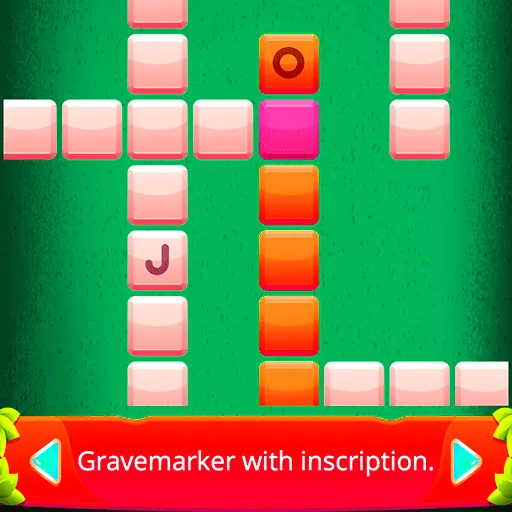 #1Daily Crossword PuzzleTake your time and piece together each answer from the clues.
 #2Word Cross ExplorerSwipe letters to connect and form words.
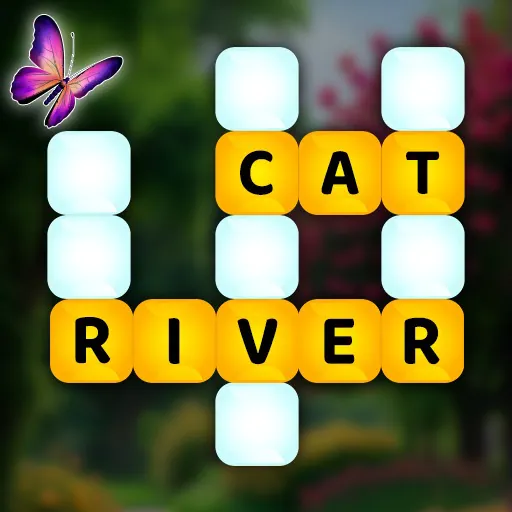 #3Word Wonders PuzzleSwipe letters to form correct words and fill all crossword blanks.
 #4Word Connect JourneySwipe or tap letters to form words.
 #5Word Scramble ChallengeWord Scramble Challenge is a word puzzle game where you rearrange scrambled letters to form correct English words.
 #6Word Search RelaxLook at the list of hidden words, search for them in the letter grid, and swipe letters to form words.
How a crossword grid works
Every answer runs either across, from left to right, or down, from top to bottom. Each starts in a numbered square, and the clue list tells you the number, the direction and usually the length of the answer in brackets. The important part is that most squares belong to two answers at once. A letter you place in an across word is also a letter in a down word, so every correct answer quietly helps you with its neighbours. That crossing structure is the real engine of solving, and it is why you never need to know every answer cold.
Two broad styles exist. In a straight or quick crossword, each clue is a plain definition, so 'large feline (4)' gives LION. In a cryptic crossword, each clue hides wordplay as well as a definition. Most casual and app-style puzzles, including Daily Crossword Puzzle, use the straight style, which is the best place to build your skills before trying anything trickier.
The clue types you will meet
Even in straight crosswords, clues are not all written the same way. Learning to recognise the type tells you what sort of answer to look for.
- Definition clues: a simple meaning, often a synonym. 'Happy (4)' could be GLAD.
- Fill-in-the-blank clues: a phrase with a gap, such as 'Better late than ___ (5)' for NEVER. These are usually the easiest in the grid.
- Category clues: 'Fruit (5)' or 'Capital city (5)'. The length narrows a big category to a handful of options.
- Abbreviation clues: when the clue itself is abbreviated or says 'for short', the answer is usually short too.
- Question-mark clues: a question mark at the end signals a pun or a playful twist, so do not read the clue too literally.
- Themed clues: some puzzles link several long answers to one topic, and spotting the theme can unlock the rest.
Match the grammar of the clue
A clue and its answer can always swap places in a sentence. If the clue is plural, the answer is plural. If the clue is in the past tense, so is the answer. 'Ran quickly (6)' wants something like DARTED, not DART.
Where to start on any crossword
Do not start at 1 Across and grind through in order. Read the whole clue list once and fill in only what you are sure of. Fill-in-the-blank clues and short three- or four-letter answers go first, because they are quick and they seed the grid with letters. Next, look for answers whose lengths are unusual, such as a fifteen-letter phrase, since there are fewer candidates.
Then work outward from each answer you have placed. Every letter you write in becomes the start, middle or end of a crossing word, and a clue that meant nothing a minute ago often becomes obvious with two letters already showing. Solvers call this working the crossings, and it is the single most useful habit you can build. Word Cross Explorer and Word Wonders Puzzle are friendly ways to train it, because you swipe letters into a small crossword board and each word you find fills in squares for the others.
Letter patterns that crack hard answers
When you have a few letters but no answer, think about how English words are built. Common endings such as -ING, -ED, -ER, -EST, -LY and -TION fill the last squares of many answers. Plural clues often end in S. Letters like Q are nearly always followed by U, and pairs such as TH, SH, CH and CK are far more common than random combinations. Writing a likely ending in pencil, even if you are not sure, often reveals the whole word.
It also helps to say the clue aloud and try candidate words against the letters you have. A grid that reads _ A _ E for 'Speed (4)' leaves you checking PACE, RATE and RACE, and a crossing letter will soon decide between them. If you enjoy this part of the puzzle most, unscrambling games like Word Scramble Challenge train the same instinct for which letter orders make real words.
What to do when you are stuck
- Move to a different corner. A fresh area with its own easy clues often loops back and gives you the letters you were missing.
- Reread the clue as a different part of speech. 'Bear' could be the animal, or a verb meaning to carry or put up with.
- Question an answer you were sure of. If two crossings refuse to work, one of your placed words may be wrong.
- Take a short break. Answers that would not come often appear the moment you return with fresh eyes.
- Use a hint on one letter rather than a whole word, so you still get the satisfaction of solving the rest.
Daily Crossword Puzzle lets you erase and try again until an answer fits, and offers hints when you feel stuck, so it suits learners who want to experiment without losing the puzzle. Using a hint is not cheating when you are learning. Notice why the answer fits the clue, and you will recognise that kind of clue next time.
Building your crossword vocabulary
Crosswords have a vocabulary of their own. Short words with friendly letters, such as ERA, ORE, ALE, ODE and AREA, turn up again and again because they fit awkward corners. Keep a mental note of words you have met more than once. Over a few weeks you will find that many clues answer themselves. Word connect games help too: Word Connect Journey has you find words hidden across a grid in any direction, which builds the habit of seeing words in strings of letters.
A good routine for getting better
Little and often beats a marathon session. A single themed puzzle a day, solved over a cup of tea, builds pattern memory faster than an occasional long attempt. Begin with easy grids, finish them, and only move up when you are completing most puzzles without hints. If you want a change of pace on the same skills, try a calmer letter hunt in Word Search Relax, read our word search guide, or browse all our word games for more ideas.
Crosswords sit happily alongside other logic puzzles too. If you like the feeling of a grid locking into place, our free brain games guide covers other puzzles that reward the same patient thinking, and Math Sticks Puzzle swaps letters for matchstick equations.
Frequently asked questions
What is the best way to start a crossword?
Read through all the clues first and fill in the fill-in-the-blank and short answers you are sure of. Then work outward through the crossing words, using the letters you have placed.
What does a question mark at the end of a clue mean?
It warns you that the clue is playful, usually a pun or a twist on a familiar phrase, so the answer will not be a plain dictionary definition.
Is it cheating to use hints in a crossword?
Not while you are learning. Look at why the answer fits the clue, and you will recognise that style of clue next time. Hinting one letter rather than a whole word keeps most of the challenge.
Can I play crossword games free online?
Yes. Daily Crossword Puzzle, Word Cross Explorer and Word Wonders Puzzle all run in your browser on OnlineGameWorlds with no download.