Idle games are the strangest success story in modern gaming: titles where the central promise is that they keep playing when you do not. What began as a joke about clicking a cookie has become one of the most-played genres on the web, and the browser is still its natural home. This guide explains how incremental games actually work, why the loop is so hard to put down, how to tell a well-designed idler from a padded one, and which related genres to try when you want the same feeling with more to do.
Our picks — play them free
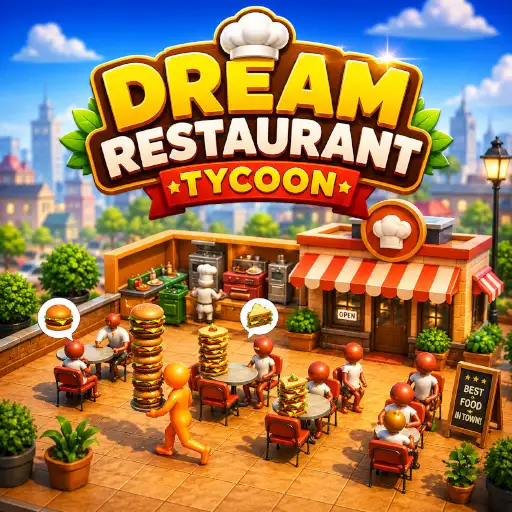 #1Dream Restaurant TycoonClick or tap on cooking stations to prepare dishes, then deliver completed orders to waiting customers.
 #2My Idle Mart Empire TycoonClick or tap to move goods onto the conveyor belt and produce inventory for your mart.
 #3Sweet Bite Idle GameClick or tap the main production area to generate income manually in the early stages.
How an idle game actually works
Every idle game runs on the same engine underneath: you earn a currency, you spend it on something that earns currency faster, and the numbers get bigger. The first few minutes are manual — you click. Then you buy something that clicks for you, and the game starts generating progress on its own. From that point your job shifts from doing the work to deciding where the work should go.
The genre's real trick is exponential growth. Numbers do not creep up, they accelerate, and a purchase that felt enormous ten minutes ago becomes rounding error. That constant re-scaling is why an idler can hold attention for weeks: the goalposts move, but they always feel reachable.
Prestige: the loop inside the loop
Most idlers eventually offer you a deal that sounds terrible and is not: throw away all your progress in exchange for a permanent multiplier. This is usually called prestige, ascension, or rebirth. Accepting it resets your numbers to nothing, but the run you start next is dramatically faster, and you reach your old ceiling in a fraction of the time.
Prestige is what turns a few hours of play into a genuine long game. It also gives the genre its central skill: knowing when to reset. Too early and you waste the run's momentum; too late and you spend hours grinding for gains a reset would have handed you in minutes.
The one habit that makes idlers better
Reset earlier than feels comfortable. Almost every new player holds on to a run far too long because throwing away progress feels wasteful. The multiplier is the progress — the numbers on screen are temporary. If your growth has visibly slowed for ten minutes, it is usually already time.
What separates a good idler from a grind
The genre has a bad reputation in some circles, and sometimes it is earned. The difference between an idler worth your time and one that is just waiting comes down to a few things:
- Decisions, not just purchases — competing upgrade paths you must choose between
- New mechanics unlocking over time rather than the same buttons with bigger numbers
- Offline progress, so closing the tab does not punish you
- A visible next goal at all times, never a blank wait
- Prestige that arrives before the first run gets boring
A good idler is really a resource-management game wearing a very relaxed costume. If you enjoy that side of it, tycoon and simulation games games scratch the same itch with more to manage, and strategy games titles take the same planning instinct and add an opponent.
Why the browser suits the genre so well
Idle games and browser tabs were made for each other. An idler does not demand your full attention, which makes it perfect for a background tab you check between other things — and because there is nothing to install, you can pick one up on a whim without committing storage or a signup to it.
It also means you can try several quickly. Idlers vary enormously in pacing, and the only way to find one that matches your patience is to sample a few. Browse casual games and simulation games for the fastest way to find something that clicks, or check newest browser games for recent additions.
Do you ever actually finish one?
Some have a true ending, usually after several prestige cycles and a final wall of numbers. Many do not, and are designed to be put down rather than completed. That is worth knowing going in: the healthiest way to play an idler is to treat it as something you visit, not something you owe time to. When it stops being interesting, closing the tab costs you nothing — which is exactly the freedom a browser game gives you.
Frequently asked questions
What is the difference between an idle game and a clicker game?
Clicker games start with manual clicking as the core action; idle games emphasise automated progress that continues without input. In practice almost every modern title is both — you click early on, then automate, which is why the genre is often called incremental games.
Do idle games keep progressing when I close the browser?
Many do, using a timestamp to calculate what you earned while away, though some cap how much offline progress counts. Games that give no offline progress at all effectively require the tab to stay open.
What does prestige mean in an idle game?
Prestige resets your progress in exchange for a permanent multiplier that makes the next run much faster. Knowing when to reset is the main skill in the genre — most players wait far longer than they should.
Are free idle games online safe to play without downloading?
Yes. Browser idlers run in the tab with nothing installed on your device, so there is no installer and no admin rights required. Progress is normally saved in your browser's local storage.